
Welcome
Unlike Anything You'd Expect
South Dakota's FIRST Platinum LEED Certified Green Building
Museum Tour
Banquet Tour
The Musuem of Visual Materials is a hands-on family friendly museum which brings a great educations on the history of Sioux Falls by being one of the oldest buildings in Sioux Falls. It also bring great education on the future of Sioux Falls with its inovation in GREEN technology.
The building layed vacant as was a big eye soar for the city. It was used for storage of pluming pipes and large containers. Most of the windows and doors were bricked in creating a cold and stale atmospere inside. View the renovation process.
In the mid 1900's the building was the whole sale distributor for Midland Distributing or Seagrum's Distributing. The building was painted completely white on the inside and the building was wearing down fast.
The Standard Oil Company became "The Gas Station" of Sioux Falls. This was the most famous era for the building and is the most recoginized by the citizens of Sioux Falls. The original signs that once stood over the building can be found hanging in the atrium of our building. Come Learn about the amazing story of the rehabilitaion of the Standard Oil signs.
The beginning of it all. The Consolidated Tank Line Company brought Sioux Falls the fuels and oils that it needed through the railroad lines tha passes through Sioux Falls. Cobalstone streets boardered the south and west sides of the building and what is now considered the first floor of the building was actually the second floor in the 1880's. You can see the windows of what is now concidered the basement of our building in the picture.
The Musuem of Visual Materials can bring you and your guests the most elegant atmosphere available in Sioux Falls. With beautiful Quartzite walls and bold rustic beams, you will be amazed to find a jem like this in Sioux Falls.
The musuem can hold parties of 20 guests up to 240 guests for banquet seating. Have a larger party or thinking about a cocktail style event, we can accomidate your party for up to 300.
We allow guests to decorate their event to their liking. The building has so much charecter that you decorating will be very minimal and easy. We setup our tables, chairs, and linens, and you get to bring it all together with the fihishing touches.
Let the Museum of Visual Materials cover your something old. The building was established back in the late 1880's and is one of the oldest buildings still standing in Downtown Sioux Falls.
Because everyone has their own tastes, we allow you to bring in your own decorations and we even let you bring in your caterer of choice. We are one of the few facilities which allows open catering.
Our GREEN technology allows us to bring innovation and class to a rustic environment. The best of both worlds will leave your guests breathless. Wanna dance? Our wood floors provides you with an endless sized dance.
The summer brings a cool relaxing feel while the winter brings you a warm cozy environment. The beauty of the building, the easy planning and you bring all of the little things together to make your event special.
The Museum of Visual Materials in Sioux Falls, South Dakota is one of the oldest buildings in town and one of the greenest buildings in the state. We have been registered as South Dakota's first LEED platinum certified green building. We are a privately owned museum that is reaching out to the community to bring you a museum unlike anything you'd expect.
This family fun museum provides activities, events, tours, and hands-on displays. Not only can you see thousands of interesting displays but you can sit down and read any of our 4,000 some books. Enjoy music? Sit in our easy chairs and pick from our 1000+ vinyl records and relax in our Music Room.
Where does all of this come from? One lady's house! The building contains the collections of the Faithe family. The items were not to be sold on a rummage sale, so everything was donated to the museum for the community to enjoy. Where else would you be able to find a collection of over 80,000 sewing buttons?
Unique, Elegant, Rustic, Inviting. The Museum of Visual Materials has become a hot spot for weddings and banquets.
The Uniqueness of our facility will bring your guests an entire new environment.
The Elegance will bring you the butterflies in your stomach.
The Rustic building along with its innovation will surprise you.
The Inviting staff and building will make your planning easy and your event wonderful.
Dr. Matthew Faithe
The Museum was established by Rose Faithe who came up with the name and the concept from her uncle, Dr. Matthew Faithe.
Matthew lived in Kenyon, Minnesota where he had a panel wagon that he would drive around. The name on the side of that truck was "Museum of Visual Materials." This panel wagon allowed him to travel from place to place with his projection slides, collections, and artifacts from the many places that he visited.
Matthew traveled the world and was a very adventurous individual and well educated. Mathew would take groups on tours in Egypt along with other locations, and he also taught flying to U.S. fighter pilots. He had three PHD's including Archeology, Anthropology, and Egyptology.
You can stop down to the Museum of Visual Materials and learn more fascinating facts about how this man inspired the creation of the Museum of Visual Materials.
Dr. Rose Faithe
Dr. Rose Faithe is the founder and donator of the Museum of Visual Materials. The collections that you may find in the museum where donated by Dr. Faithe so that people could learn hands on and discover by learning through the five senses.
Rose was born in Wecota and graduated from Cresbard in 1948. She then pursued her education and graduated from Creighton Law School in 1960 and the University of Nebraska Medical Center in 1964. She was one of the quota of four women allowed into the medical class of 100 at the UNMC.
Rose privately practiced in Wakonda from 1965-72. She taught at the UNMC from 1982-87. She pursued her private practice again, this time in Viborg, SD in 1991-95. Her first private practice was with her Aunt Margaret back in 1965.
Dr. Rose Faithe is now retired in Sioux Falls and is constantly writing books to be published. Rose has requested that no pictures of her are to be posted.
Mare
Dr. Margaret Faithe
Rose Faithe and her Aunt Margaret were close. Margaret was a very driven individual and achieved many goals in the medical field. She practiced general and family medicine in Wakonda, SD from 1955-1969.
In 1970 she became Assistant Professor of Family Medicine at UNMC and helped develop the department form 1970-1972. She achieved the status of Professorship in Family Practice in 1977 and continued teaching until her retirement in 1987.
Dr. Faithe directed and practiced at the McKennan Free Clinic from 1989-1999, when she retired from her medical practice.
Rebuilding Downtown Sioux Falls
Dr. Rose Faithe had purchased the old Standard Oil Building in 2005. The building was in rough shape and looked as if tearing down the building would be in the best interest for everyone. Rose, seeing the potential of an old 1887 warehouse, figured this would be the best place for her Uncle Matthews dream of a "Museum of Visual Materials." This renovation is the start of Sioux Falls' "Uptown" project which is in talks or starting project ground breaking in the fall of 2010.
The Materials and Displays
Where did all of the materials and displays come from? Dr. Faithes house! everything in the house was stored in perfect order, all categorized. Dr. Rose Faithe didn't want to sell all of the collections on a rummage sale or make money off all the things that she stored, she wanted to give it back to the community and let them enjoy the things that might remember from when they were growing up. All of our displays are hands-on and consist of dolls, antique Avon bottles, porcelain frogs, treasure trolls, and so much more. The displays are switched out every 6 months to keep things fresh and always changing. Visit the museum today to see what is being displayed now! Where else can you find someone who has collected 80,000 sewing buttons and kept them perfectly organized?
The Renovation
The renovation started in 2005 and was completed in the spring of 2007on Dr. Faithe's Birthday. The Museum officially opened its doors on June 1st, 2007. You can see the museum as it was going through its transformation by clicking the link "Green-Renovation Tour." Not only can you see the progression of the construction but you will be able to take a virtual tour of our buildings green features and historical land marks.
Downtown Life
The Museum of Visual Materials is a start to bringing back the life of the Downtown District. Renovations and new uses for historic buildings downtown have created a craze for downtown loft living and businesses. The museum has proved that there is potential in renovating the buildings which most people would consider demolition. The picture of the above cityscape shows a panoramic view of Sioux Falls in the early 1900's.
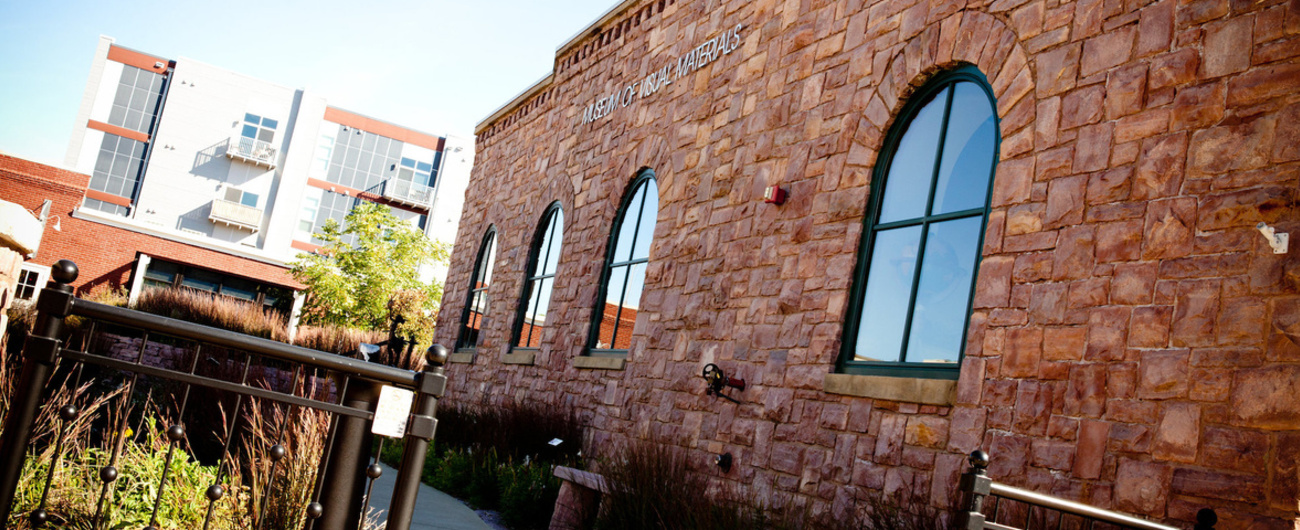
When you arrive at the Museum of Visual Materials, you are invited by beautiful landscape and stone architecture. Pink quartizte creates the rustic feel from the late 1800's.
As soon as you open the doors, you know you are in a completely different place. An inviting demonstration kitchen for cooking classes. Large pillars support the rustic cealing which invites in natural sunlight through it sky light window.
Books, books, books! A lot of history can be found in books and so that would mean we have a lot of history. With over 4,500 books on display from art books, gardening, research, non-fiction, childrens, antique dictionaries, and many more, you will sure find a book that will strike your interest.
Our displays vary from African art, European dolls, Asian artifacts, ceramic frogs, treasure trolls, avon collectable bottles, snow globes, and so much more. That is what make the museum so interesting. It truely is "Unlike Anything You'd Expect"
It is more than about seeing and feeling. We also provide a little something for the guests who want to sit back and listen to the past. With over 1000 vinyl records and a hand full of 8-track and cassette tapes, we provide many lost styles of music. We even have records from the local high school bands from many years ago.
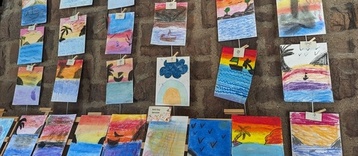
Our art walls provide a great opurtunity not just for guests but for artists as well. Our wall house local artists big and small. This is a great way for our artists to get some exposure. Guests may view the artwork and also purchase artwork from our facility.
Please control your volume.
Click the speaker above and
music will play on this page.
Music Room
The music room at the Museum of Visual Materials allows guests to listen to over 1000 vinyl records, a large selection of 8-tracks, cassette tapes, and CD's. With a wide selection from Beethoven to Gershwin, and Broadway musicals to some folk waltzes, our music will invite you to relax and listen to some great classics. Being a hand on museum, youre welcome to play the organ or learn from the other instruments we have on hand. It is always a learning experience when you learn hands on. This room does require parental supervision. (Click above to listen to some of the selections that we have on hand.)
What's Green?
The cabinetry which holds all of the listening materials is made of compressed wheat. Whatever is typically blown away in the wind can now be reused and made into a type of particle board. By doing this, we can cut down on the use of lumber used to make cabinets.
The paint used to add color to these walls is a low VOC paint. This makes reduces the harmful chemical given off by most of your other paints.
The soy-based insulation used behind the walls keeps the music room cozy in all types of weather. Sprayed in insulation created from soy product expands into any the face of the wall creating a perfect seal from the outside weather.
GREEN carpet is an easy way to create a comfortable and mobile flooring concept. Carpet squares made from recycled materials are easy to remove and replace due to any damage they might endure. The carpeting helps create a efficient sound barrier for our music room.
Hall Of Americas
Before you enter the Hall of Americas, guests are invited by a professional cooking display/demonstration kitchen. Classes are held so individuals and groups can have some cooking fun with a professional chef! View our upcoming activities to see if we have any classes that might interest you.
The Hall of Americas is the largest and oldest part of the Museum of Visual Materials. The building origninated as the Consolidated Tank Line Company. What is now considered the main level was once the second level back in the late 1880's. The stone used for the walls of the room were collected and brought from the falls a couple hundred feet away from our site location. The stone is placed in a very jagged manor without reason and purpose. This technique can only be seen in a rare number of buildings that are still standing today. The original wood floors still provide a beautiful and rustic feeling and you enter the room which the roof is supported by large timber coloums. The enormous wooden beams support the structure to create a room full of history.
The Hall of Americas provides ample room for conferences and receptions. It also is utilized as our activities area for large craft days and other large events and activities. Local artists display their pieces of art on our walls. The ranch oak furniture from the Faithe family lines the room and walls and books and displays provide guests with the nicknacks they might remember while growing up. The best part is everything, except for the artwork, is hands on.
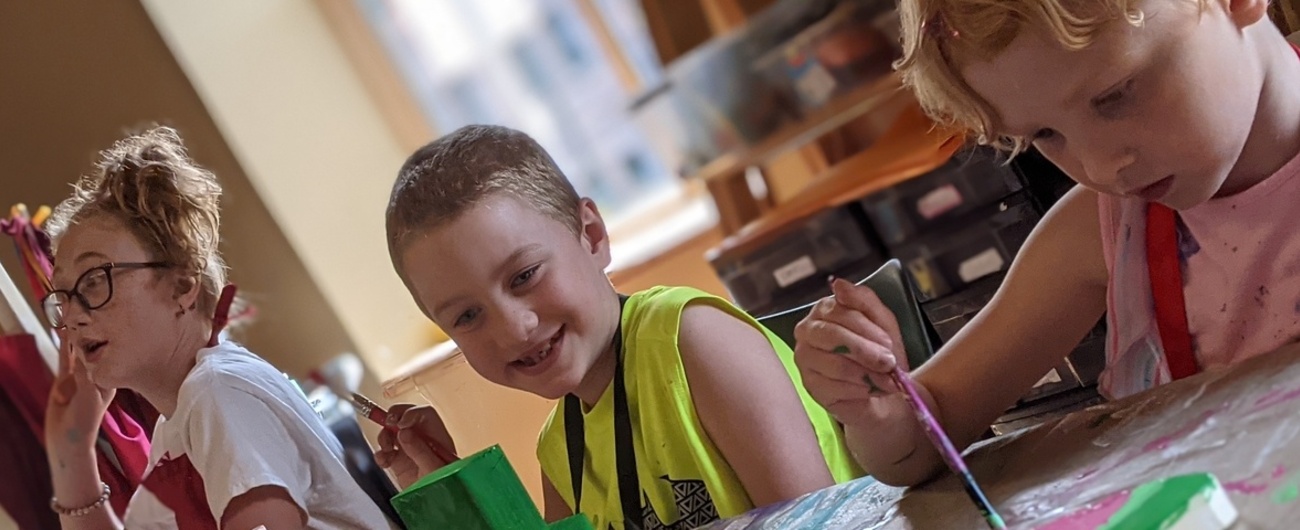
We also provide children and guests with an arts and crafts area where they can expand their creativity. We offer classes and demonstrations for kids and families to learn some fun things and share them with friends.
What's GREEN?
With all of this history comes inovation. Not only can this room tell where Sioux Falls has been, but it can tell where Sioux Falls is going with all of its GREEN inovation. You can set up an individual tour or large group tour to learn the ins and outs of our facility and learn why we have a shower!
Our geo-thermal heating and cooling system is located in the basement of our Hall of Americas. We heat and cool our facility with the water vein hundreds of feet below the ground. The average teperature of the water pulled from the earth is 56 degrees. The system acts in the opisite of an air conditioner when heating the facility. It rejects the cold water and creates a reaction of heat. The coolness of the water provides the cold air which is transfered into the building during the summer.
With natural lighting during the day from the sky lights and windows, at night the museum is lit up with very low wattage LED gallary lighting. The lighting that the MOVM use to use was a 35 watt halogen based bulb which took around 4,600 watts everytime the lights were activiated with the motion sensors. after replacing the lighting with the LED bulbs we went from 35 watts to 1.8 watts per light and a total of 240 watts. This is an energy savings of almost 2,000%.
The three large skylights and large high efficient windows provide ample sunlight to help us cut down on electicity costs.
The large pillars which support our trusses in our building were brought here from within a 400 mile radius. These pillars where saved from an church in Minnesota which was going through demolition.
Reusing the original wood floors instead of bringing in entirely new products allows us to cut down on product waste and keeping the amazing charecter of our building.
The sewing and craft area flooring brings an exotic looking flooring called cork. Many people know that cork is used for many different products, but what about flooring? Cork is a fast renewable resource which is harvested about every nine years. To learn more about cork flooring, check out our green tour.
Birch book shelves provide a strong structure to house our books and displays. This product is a hard fast growing wood and naturally beautiful.
Soy-base insulation provides a great barier from the outside elements. This sprayed in product expands sealing cracks and gaps more efficently than fiber insulation. Spray insulation contains a very high "R" value which is the rating system for insulation efficiency.
The paint used to add color to these walls is a low VOC paint. This reduces the harmful chemical given off by most of your other paints.
Okay, why the shower at a museum? We encourage individuals to use alternative transportation for commuting. Biking to work is a great way to get exercise as well as cutting back on emmisions from automotive transportation. The shower allows downtown commuters to freshen up before going into the office.
Pallet flooring creates a stabel raised floor in our shower and laundry area. These pallets were found in the building when it was taken over in 2005 and were reused in the renovation process.
Take the outside tour to learn what's GREEN on top! You can also continue your inside tour by visting our Hall of Continents.
A lost art brought back to the community to learn and enjoy!
Learn something new today.
Hands on activities and classes are fun for all ages.
Crafts and classes will keep kids busy.
The Hall of Continents
The Hall of Continents was later added to the facility between the 1920's and 1940's. We do not an official record of when the completion of this room was added.
The long narrow room provides a comfortable space for housing a majority of our bookshelves along with books and displays specifically for each of the continents besides the Americas. The hands on displays also provide interest for guest such as European dolls, African artifacts, Asian collectables, and other knickknacks.
The hall also contains some prints from Miguel Covarrubias which depicts the foods, industries an ways of life in the regions of the world as seen by the artist in the early 1940's. The walls also house some exquisite paintings by Tere Sanz.
The flooring in the Hall of Continents is probably the most dominant feature in this hall. The bamboo flooring in this room is attractive along with being very durable. Bamboo is a very fast renewable resource which some species of bamboo can grow up to 48 inches in 24 hours.
Not visible from the inside of the room but on top of the roof of the Hall of Continents is our photovoltaic panels or solar panels. These panels provide us with up to 13% of the energy required for our facility.
Motion sensors and LED lighting provides an energy efficient room. Motion sensors allow us to leave the lights on and after no activity for 15 minutes, the lights will automatically turn off to conserve energy.
Continue your tour to the Hall of Americas or discover our outdoor gardens area.
This is the outside of the building before we started the renovation process.
After so many years of changes, the building is now surrounded by beautiful mother nature.
Outside Tour
The Museum of Visual Materials was once a cold, unattractive facility scheduled to be torn down. If you come down to the museum, you will notice in the 1880's picture that the building had windows under what are now our existing windows. What is currently the first floor of the museum use to be the second floor in the late 1800's. Our facility being in the bottom of a valley would have water and flooding issues. Fill dirt was brought in and covered up the lower level of our building. the key stones of the old bricked over windows can still be seen peaking up out of the ground.
The outside of our building is surround by South Dakota beauty. All of grounds are covered by native South Dakota plants and grasses. Colorful flowers make an awesome backdrop for senior or wedding pictures.
The sculpture "Spirit of Energy", by Karen Crain purchased by Dr. Rose Faithe, the MoVM founder faces the sunset on the west side of our building. "The Spirit of Energy" is a allegorical figure that represents the three natural energy resources. She holds the sun high above her head, as the wind blows her hair and garment behind her. Water pours from her other hand representing the third energy source. This strong female figure stands on a globe, echoing humanity's use of the earth's natural resources.
The native plants and grasses that surround our building provides a beautiful entrance to our facility. The drought tolerant vegetation is use to cold winters and dry summers making it sustainable to our environment. It also provides wild life such as bees and butterflies with the things that they need to survive.
The rain garden allows the landscaping to use natural rain waters from the roof of our facility. When it rains the plants create a natural filter for the rain water as it travels down into a holding reservoir. Drainage tile runs throughout the grounds, which allows the plants to take the water from the reservoir as it needs it. This allows us to cut back on our water bill and time since we don't have to use our water to replenish the plants.
The roof supports 40 photo-voltaic panels or solar panels. At this point, we are the only building in Sioux Falls that uses solar energy to create electricity. Creating about 13% of our energy, these panels allow us to save on electricity by using less from our power provider.
The roof of our facility is covered in a white rubber sheeting which lies on top of a thick expansion foam for insulating our roof. The white rubber creates reflection instead of absorption. This helps keep our facility cool even when the hot sun beats down on the building.
White concrete acts in the same way by reflecting the suns heat away from the building. have you ever been at the pool and the surface is too hot to walk on? Well here is your solution!
Quartzite stone provides a beautiful hardscape to go along with our landscape and quartzite building. As you may know, quartzite is a very common material around falls park. By using natural quartzite stone from a local quarry, we can create a natural surrounding that is close to home. The hardscape artist chiseled the stones to create a beautiful rough texture appeal to the rock to make it more natural.
Buffalo grass carpets the back of the facility. This grass is very sustainable to the South Dakota environment and doesn't grow at a very rapid rate allowing us to cut back on our mowing. When we do mow the back, we use an electric mower which cuts back on dangerous emissions.
Green Parking gives front row parking to those with hybrid cars. This is an initiative for individuals to find more efficient transportation. We also provide a bike rack for bike commuters as well as a trolley stop for shuttles around downtown Sioux Falls.
Here are the plants and grasses at the
Museum of Visual Materials. Click on the
picture to view the information about each
plant or flower.
MoVM Banquets
The Possibilities of Your Next Event
The Museum of Visual Materials is the perfect place for weddings, corporate events, family gatherings and community events. The unique character of our facility brings Sioux Falls the most unique and memorable event possible.
Our rooms provide seating for parties with 10 people to groups of just under 240 guests. Our accommodating staff, bar services, dances, and our open-source catering provides you great flexibility to make sure that all your needs are taken care of.
Need help lining up your services or new and creative ideas to make your event great and unique? Our staff with over 13 years of experience in the industry will be able to make sure all your needs are met while making sure all of the details are covered for you and your event.
Fridays and Saturdays are the most popular dates to book events at the Museum of Visual Materials, but we are available for rent any day of the week, except for major holidays. To set up your event at the museum, please call Jeremy Brech at
605-271-9500 or email at jeremy_sfmvm.com
Printable Policies and Sample Contract
Policies at the museum are always subject to change or update. Click on the PDF below for a sample contract for the museum rental.
Hall Rentals
The Museum may be rented out any day throughout the week Sunday through Saturday. Hall rentals may be limited on time due to staffing.
Rentals will consist of a time frame for clients from 8:00AM to 12:00PM and 4:00PM to Midnight on the event date. Time of facility shall not exceed 12 hours (including decorating/set-up time). Clients events ending at midnight will allow them an extra half hour for cleanup. Clients taking longer than 12:30AM for cleanup will be charged an additional $75. Clients are allowed to choose a 1:00 AM ending time which will allow them a 1:30AM clean up. By choosing a 1:00AM ending time, the client will be assessed a $75 overtime fee. If a clients clean up is not completed by 1:30AM, the client will be charged an additional $75 overtime fee. Holiday fees may apply.
Each hall rental includes (1) manager on duty. If you wish to have more staff available, please contact the Activities Director for assistance.
Required Deposits
The deposit for rental is half of the hall minimum.
-The entire museum rental is $650 and the required deposit is $325. (This rental includes 10 round tables, 5 rectangle tables, and 100 chairs.)
-Atrium Rental is $150 and required deposit is $75. (Does not include rental items)
-The Hall of Americas to be rented as is (no bookshelves or banner removal) $300 and required deposit is $150.
A clients event is not finalized until the deposit has been paid and the contract has been signed.
Room Layout and Guest Count
Your final room layout and guest count must be agreed upon no less than 5 business days prior to your event.
Any changes after Monday (the week of your event) will be honored, but the client will still be charged for the agreed upon rentals, even if your changes result in a lower amount of equipment usage/rental.
If changes result in a higher amount of equipment usage/rental, the higher amount will be charged.
Restrictions
Absolutely no confetti, fireworks (including sparklers), rice, sand, birdseed, Silly String, glitter, tape, glue, nails, pins, spray paint, spray of any kind, Play Dough, animals (including goldfish), may be brought in to the museum or be found on its grounds. Museum staff reserves the right to confiscate any of the above listed materials. You are responsible for your guests abidance to this policy. White table linens will to be provided, set and removed by the museum. Guests are not able to bring in linens unless they are colored special order linens. If you do provide any specialty linens, you will be required to remove them 15 minutes after your ending time.
No disposable dishware is allowed. The only exceptions to this policy are recyclable plastic keg cups, punch/coffee cups, and cake plates. Several local rental companies are able to rent place settings (see preferred vendors). If your caterer is providing your place settings, you are responsible for making sure they are non-disposable.
You may provide your own caterer (see preferred vendors). Your caterer must provide table attendants to clear plates/silverware/trash, or you may provide your own table attendants. We do not have staff available for these services.
No outside beverages may be brought in to the facility or be found on its grounds. Exceptions to this policy include only punch, coffee, and caterer provided water service. If requested, the museum can provide water service for $.50/guest. The museum does not have coffee service available; please check with your caterers for this service. You will need to provide the glassware for water service. Ask you event manager for more information if you are interested in hosting beverage service for your guests. (See Bar Service for more information)
All smoking must be done off museum grounds. Museum grounds consist of everything inside the black railing, and outside of the quartzite rock border in the back.
Decorating
All hall rentals include decorating time between 8 AM and 12 PM. We will open the doors again at 4:00 PM until 12:00 Midnight. If you need additional set-up time, please arrange this ahead of time with your event coordinator. You are responsible for communicating with your vendors (cake, florist, DJ, etc.) that they are only able to access the museum during the above listed time, unless previous arrangements are made.
No open flame candles are permitted. All candles must be surrounded by a glass receptacle. (See also Restrictions.)
The museum is required to provide
Please assemble all decorations before arriving. This facilitates a much faster decorating and set-up time.
All decorations must be removed immediately following your event. The museum staff is not responsible for items left behind. Anything left behind will be thrown away and you may be charged a maintenance fee.
License and permits
Anytime a bar service is being used, the client will be required to use a museum staffed bartender and will be required to pay the $75 bar license fee. Anytime alcohol is being used at the museum a license fee must be purchased by the client.
Sound permits must be purchased by the client from the City of Sioux Falls from the Health Department anytime amplified music is being used outside of our facility such as the gardens or the front entry area. The Health department is located directory west of the Museum of Visual Materials.
Museum staff has the right of refusal on any permits to clients.
Bar Service
Bar service will consist of a $75 License and Permit fee. Clients must use museum staffed bartenders only. Bartenders are $25 per hour on a 3 hour minimum and the time starts as soon as the event is scheduled or bar tender is requested to start. Bar prep or teardown is not included in the clients requested time of service.
If clients are not having alcohol, they are not required to have a bartender but are required to use the museum for beverages. Any special orders must be approved by the events director and the museum director. This will also provide a cooler with ice but will not be staffed, only monitored for inventory.
The museum is unable to provide a hard alcohol beverage. The museum has a Malt Beverage and Wine license. Any hard alcohol on museum grounds must be removed immediately. Noncompliance to do so will result in the content being taken away from the guest. Clients may be fined $150 per bottle for not abiding by this rule, due to the museums threat to losing its licenses and permits to serve.
Outside coolers or beverages are not permitted on museum grounds and may be taken by museum staff.
Beverage services may be hosted by the client, otherwise all beverages are cash. Pop and water is $1.00, house wine is $4.00 a glass or $14 a bottle, champagne is $3.00 a glass or $12 a bottle, Domestic Kegs are $250 and bottles are $3.00, and Specialty Malts are $325 minimum a keg and $4.00 a bottle.
Insurance
Any clients renting the facility must provide proof of $500,000 of liability insurance. Liability insurance would cover any damage to the museum and its property. This will not include damaged linens, table skirts or fees under $100. These fees will be billed directly to the client. Liability insurance would be covered in the clients home owners insurance.
Clients should contact their personal home owners or renters insurance agent. Museum staff is not to contact insurance agents regarding liability insurance policies. This is the clients responsibility and not museum staffs.
Any client not willing to provide their personal liability insurance will be charged $300 and museum staff will provide the $500,000 liability through our insurance company under the name of the client.
The museum has the right to bill the client for any theft or damages such as damaged linens, table skirts, broken dishware, vandalism, landscape damage, or any other destruction of property.
Parking
NOTE: Parking in downtown Sioux Falls surrounding the museum is available, but never guaranteed.
Handicap parking is available in the north parking lot with a handicap ramp for museum access. The north parking lot can be accessed on the north side of the Adwerks building on the east side of the road.
Parking for events is available around the museum grounds and is not metered after 6:00 PM on Fridays or all day Saturdays and Sundays. During the week, all parking around the south side and the west side of the facility is 2 hour parking and is subject to ticketing before 6:00 PM. The museum is not responsible for parking violations, tickets, or towing.
There is absolutely no parking in the North and East parking lot Monday through Friday from 7:00 AM to 5:30 PM. Vehicles may be towed. The north parking lot is available after 5:30 on Fridays and all day Saturdays and Sundays.
The large paved parking lot to the south of the building across the street is available after 5:30 on Fridays. It will also be available on Saturdays and Sundays.
In Case of Emergencies
Fire
In case of a fire, guests are to leave the building immediately. Parents should find all children and leave out the nearest safe exit. Anyone needing assistance such as handicap or unsupervised small children should be removed by museum guests.
Museum staff should safely check all areas of the building keeping their safety in mind. Use one of two stairwells to make sure that no guests or staff members are trapped down stairs or in the elevator. In case of a fire, the elevator will go to the basement level. Never use the elevator if there is a fire or the fire alarms are sounding. After making sure the building is evacuated, have all guests meet on the West side of the building outside of the black railing fence and wait for the fire and rescue department to arrive.
If a guest triggers a fire alarm and the museum receives a bill for false alarm, the client may be subject to pay this fine.
Tornado
In case of a tornado, all guests and employees are required to move into the basement using the back stairwell in the Hall of Continents. The only time the elevator should be used in a tornado is if a guest is unable to safely walk down stairs such as a handicapped individual or a person with a disability.
Medical
In Case of an emergency call 911
For questions regarding Emergency Medical Service Planning please call Dr. Jeff Luther at 271-9000
Museum staff should use their discretion on the seriousness of first aid situations. If it is a medical condition that can be handled by museum staff then there is no need to call for emergency assistance.
The first aid kit is found in the kitchen misc. drawer. Gloves should be worn by museum staff if they are assisting the victim.
A medical form should be filled out for all medical or emergency situations.
If the medical condition cannot be handled by museum personnel then medical assistance should be called. (Stop breathing, no heart beat, seizures, other serious situations.)
The Museum of Visual Materials currently does not provide an AED service.
Cancellation
If an event is cancelled before 6 months prior to the scheduled event date, the client will lose initial deposit.
If an event is cancelled within 6 months prior to the scheduled event date, the client will be obligated to pay an additional cancellation fee of ½ half of the initial deposit.
For the entire hall, the additional cancelation fee would be $162.50
For the Hall of Continents, the additional cancelation fee would be $75
If the event is cancelled within 30 days prior to the scheduled event date, the client will be obligated to pay an additional cancellation fee of the full amount of the initial required deposit.
For the entire hall, the additional cancelation fee would be $325
For the Hall of Continents, the additional cancelation fee would be $150
If the event is cancelled within 7 days prior to the scheduled event date, the client will be obligated to pay the initial signed contract amount.
Any unpaid cancellation fees will be settled in small claims under the court of law.
2010 movm contract sample
Printable Package Pricing Form
Prices at the museum are always subject to change or update. Click on the PDF below for a pricing sheet for the museum rental.
2011 Rental packages
(taxes not included)
Entire museum and gardens - $675.00 Package includes:
• Five 8' rectangle tables
• Ten 5 round banquet tables
• One hundred chairs: stackable, with cushions
• Bookshelf and banner removal in the Hall of the Americas
Entire museum and gardens (as is) $350.00
Atrium $175.00 Package includes:
Some furniture removal
Kitchen usage
*Additional items are available for rental to customize our space
Rental items (prices based on /item)
8 rectangle tables $7.50
5 round banquet tables $9.00
Tall cocktail tables $10.00
Chairs: stackable, with cushions $1.25
54 x 114 or 81 x 81 white linen $5.00
Table Skirts (white) $10.00
Linen Napkins (white) $0.30
Bartender $25.00/hr
Screen/Projector combo (no sound) $125.00
Decorate evening before (when available) $75.00
Beer/wine license fee $75.00
Sound System $100.00
Extra Book shelve removalCall
Vases large (30 available) $1.00
Mirror squares 12 x 12 (30 available) $0.50
Podium (Floor standing) $35.00
Water Carafe $1.00
White Pipe and Drape $75
Up-Lighting Call
White icicle light accents $25.00
Holliday Fee $200 - $300
2011movmpackages
Unique for everyone’s taste
The Museum of Visual Materials provides elegant, rustic, and warm characteristics. The options are almost endless when adding your own special touches to your event. The nice thing about the museum is that it doesn't take much decorating to make a beautiful reception. Please feel free to view the photos of some of our past events.
Renovation/Green Tour
The outside of the museum took a lot of work for restoration and clean up. The building, looking like demolition was the best choice, stood rough inside a chain-linked fence and barb wire. Rolls of piping and storage bins sat on a large run of concrete. This building was the welcoming to Falls Park and was a terrible eye soar for the city of Sioux Falls. Terrible curb appeal made this building cry for help.
In 2005, Dr. Rose Faithe purchased the building and walked across the street to Koch Hazard and mentioned her plans for the rundown building. The process started renovation and Puetz Construction of Mitchell; South Dakota took on the general contracting.
1. Exterior Cleanup - The concrete was torn out around the building and the extras were removed off of the grounds.
2. Contaminated soil removal - Being an old gas station and oil storage facility, there were many soil issues that needed to be taken care of. New clean soil was brought in to fill in our landscape area.
3. Tuck-point - the building underwent a face lift with tuck pointing and the city had created a grant to restore the facade of the facility.
4. White Concrete - Most people think that all concrete is white or close to. In fact, the white concrete in front of our building has a white pigmentation which reflects sunlight preventing heat around our facility. This in turn allows us to save on cooling costs in the hot summer days. On a 90 plus degree day the concrete is so comfortable that you could lay down and stay cool from the white concrete.
5. Roofing Membrane - The roof was restored with insulation and a white roofing membrane. The white helps create a reflection instead of absorption from the heat from the sun.
6. Photo-voltaic Panels - Solar panels create about 13% of the energy used by the museum. This allows us to cut back on the electricity needed from the city of Sioux Falls. There are two rows of 20 panels above our Hall of Continents.
7. Geo-thermal - Geo-thermal is currently one of the most efficient means of heating and cooling. In the pictures below, you can view the process of drilling our well. The depth of our geo-thermal well is a couple hundred feet. Quartzite stone is rated as hard as steel and has a hardness of 6.5 to 7 on the Mohs scale which diamond is rated at a 10. Many drill bits later, they reached the depth of the well needed to power the geo-thermal system. The water is pulled from the ground at 56 degrees. The water travels into the museum and into the system. The coolness of the water is rejected creating heat for our facility, and the cooling is done by the natural coolness of the water.
8. Foundation Restoration - Dirt was pulled away from the foundation so a waterproof membrane could be added to help prevent water from entering the building.
9. Landscape Design - One of the most overlooked properties of our platinum facility is the design and placement of our plants and grasses. The water drainage from our roof provides ample water for our landscaping. The water travels down into a drainage reservoir and drainage tile is spread throughout the entire landscaping to allow natural watering. This process allows us to conserve water. The placement of the plants is very important as well. Scouring Rush needs large amounts of water to survive with little sunlight. You can find this plant right below our down spout acting as a natural water filter for our gardens. Black eyed Susan and other native grasses are in dryer more sun lighted areas since they are use to this type of environment.
10. Hardscape Design - Along with having proper plants, we wanted to make sure that the stone work around the facility looked natural and had a purpose. Having a pink quartzite building and this stone being in such a large abundance in the Falls Park area, our edging and landscaping was completed with a beautiful structure. Water paths are created in a unique design with the quartzite. People always wonder what our logo represents. It is actually the stone work in front our facility at a birds eye view. The large flat pad is the large filled in circle in the logo and the hook is the main walk way coming up to our facility. The long horizontal line is the water path leading into the stone water reservoir which is represented by the large empty circle on the right.
11. Open Windows - Most of the windows in the facility were either covered up with brick or closed in with glass blocks. All windows and doors were reopened and replaced with high efficiency windows by Pella.
12. Trolley Stop - Most people wonder what is so green about having a trolley stop right outside our door. By using community transit or car pooling, we can cut down on fuel emissions.
13. Green Parking - Do you have a hybrid? Well we have the perfect parking for you. A designated parking spot was created to allow fuel efficient vehicles to park.
The old building was used for storage for piping and creates and surrounded by chain link and barbwire fencing.
This is a northwest view of the building before our renovation process. This area is currently our main entrance and gardens area.
The building now stands proud as the Museum of Visual Materials.
Solar panels create about 13% of our energy for the Museum of Visual Materials. The white roof also helps cut back on energy due to its relfection properties.
The foundation needed to be sealed with a membrane to prevent water seepage.
The door on the south was the entrance for the electrical outlet store in the 80's.
This door now provides access to trolley goers in Downtown Sioux Falls.
The south side of the building on 5th Street was glass block windows and rough looking stone.
The windows were reopened with energy efficient windows and the stone restored.
The geo-thermal was drilled twice due to the little water flow provided by the first well.
The geo-thermal well is now straticially hidden by our landscaping in the west side of the building.
The Atrium is the first thing you walk into when you enter our facility. Many things were reused from the original structure to bring this area to completion.
1. Clean up - Many boxes and shelves were left behind in the facility. Crates and pallets were reused in the architecture to create a rustic yet environmental friendly approach. When touring the museum, you will notice the back splash and the pillar surroundings where reused pallets.
2. Sand Blasting - After viewing some of the pictures below, you may notice that some of the walls in the facility were white to reflect light in the room. Sand blasting brought back the original look and texture to the stonework and the pillars and beams.
3. Wheat Cabinets - Wheat cabinetry provides storage and counters for our music room and kitchen. Instead of cutting down trees to make furniture, we had are cabinets created out of left over wheat straw. After a harvest, the stalk and everything left over that typically blows away in the wind is gathered, compressed and made into wheat cabinetry.
4. Skylights and Windows - A large skylight and large windows provide the museum with ample natural sunlight. This reduces our need for run lights and helps us cut down on our energy bill.
5. Lighting Motion Sensors - The Atrium, music room, and bathrooms are also equipped with motion sensors for our lighting to help us conserve energy in our facility.
6. Bathrooms - The toilets, sinks, soap dispensers, and hand dryers are all hands free with motion sensors. This is energy efficient and water efficient because the fixtures only run when they need to and shut off when they are not in use. The sink sensor runs on a rechargeable battery which recharges due to the flow of the water. As the water flows through, a turbine is spun to recharge the power source for the sensor. All of the fixtures in the bathroom are low flow to prevent over usage of water needed.
7. Polished Concrete - The flooring in the atrium area is a high polished concrete. It is very durable and very easy to maintain. The texture and look of the concrete gives it a marble flooring feeling. No buffing or chemicals are needed to maintain the floorings beauty.